
Charter Reels Take a Beating.
This Guide Will Help Them Through the Next One.
A recreational angler might put 50 hours of real fight time on a reel in a good year. A charter captain puts that on before the Fourth of July.
Think about what that actually means. Countless clients a week, several hours a day, salt exposure every trip, reels being handled by people who don't necessarily know what they're doing, dragged, dropped on gunwales, cranked too hard, reeled back with sand on the line. Then they're rinsed, maybe, and racked for the next morning. Multiply that by 20 or 30 reels across a full fleet, and you have a maintenance problem that doesn't fix itself.
Most charter captains already know this. They've experienced it, sometimes mid-trip, when a paying customer's reel seizes on a fish that was going to end up in the cooler. The scramble to find a working backup while a client stands there holding a dead reel is a specific kind of misery. If it's happened to you once, you'll do almost anything to make sure it doesn't happen again.
The Real Cost of Deferred Maintenance on a Fleet
A quality offshore conventional — a Penn Fathom, a Shimano Tiagra, an Avet — runs anywhere from $250 to $700. Step up to a serious big-game reel from Daiwa or Shimano, and you're looking at $800 to $1,100 or more. Electric reels — Daiwa Seaborg, Tanacom, Shimano Beastmaster — represent a significant additional investment, with heavy-duty models reaching the upper end of the market. A working charter fleet of 25 to 30 reels represents a significant investment by any measure.
Deferred maintenance doesn't preserve that investment. It erodes it. Bearings that could be replaced for a few dollars cause gear damage when they finally seize, and gear replacements cost multiples more. Drag washers that go unserviced for two seasons compress and glaze, and glazed drag washers cause uneven pressure that scores the drag surfaces themselves. At that point, you're not replacing a washer; you're replacing components that were machined to close tolerances and aren't cheap.

The math works out to the same place every time: service a reel annually, and it runs for a decade. Skip the service, and the repair bills start compounding.
The Benefits of a Commercial Account
Running gear through 4 Reel Services on a commercial or fleet basis isn't just a volume discount arrangement; it's a different relationship. Fleet accounts get priority service scheduling, because a captain who needs reels back before a weekend booking has different timing needs than a recreational angler with no particular deadline. It's also a predictable, documented process: every reel that goes through gets the same full teardown, cleaned in 4 Reel Cleaner® concentrate, inspected component by component, rebuilt with factory parts and correct lubrication, and tested before it ships.
That documentation matters for fleet management. Knowing what condition your reels are actually in — which bearings were replaced, which drag washers are still good, which reels have recurring issues — is information you can use. It turns maintenance from a reactive scramble into something you can actually plan for.
Electric Reels Are a Special Category
If you're running electric reels for deep-drop or sword fishing, the stakes are higher, and the service schedule should reflect that. Electric reels have all the vulnerabilities of a conventional reel, plus motors, wiring harnesses, and electrical connections that saltwater attacks at every opportunity. A power-assisted reel that struggles on the retrieve usually isn't a battery problem; it's a motor or connection problem, and it only gets worse.
Daiwa, Shimano, Elec-Tra-Mate, Dolphin, and Bandex electric and power-assisted reels all undergo the same service process as manual gear. The difference is technicians who know where to look on the electrical side: connections that are starting to corrode, motor brushes that are wearing, and wiring that's showing signs of stress. Finding that stuff before it fails is the whole point.
Putting Together a Maintenance Schedule
The honest recommendation for a working charter boat is annual service on every reel in the fleet — sooner if a reel starts showing symptoms. Grinding on retrieve, sticky or jerky drag, a handle that's developed any play, an electric that stutters — those are flags, not things to note and watch.
The smartest scheduling move is to rotate reels through service during your slow months, so you're never sending in a critical portion of the fleet when you have bookings. Send 10 in one month, 10 the next. They all come back serviced on a rolling basis, and you never have the whole fleet down at once.
Some captains keep a few spare reels in rotation specifically so they can always have a full working set while a batch is out for service. That's a real solution to a real scheduling problem, and it works.
What to Include When You Ship a Fleet Batch
For fleet shipments, pack each reel individually with padding and label them clearly. A detailed note with each reel — what it's doing, when the problem started, any known history — shortens the diagnostic time and can affect parts decisions. If you know a reel took a hard saltwater submersion last season, say so. If a reel was dropped and cranking has been slightly rough since, that's worth noting.
Turnaround on most popular reel models is 5 to 10 business days from arrival. With a fleet, staggering your shipments means you're getting reels back on a rolling basis rather than waiting on the whole batch.
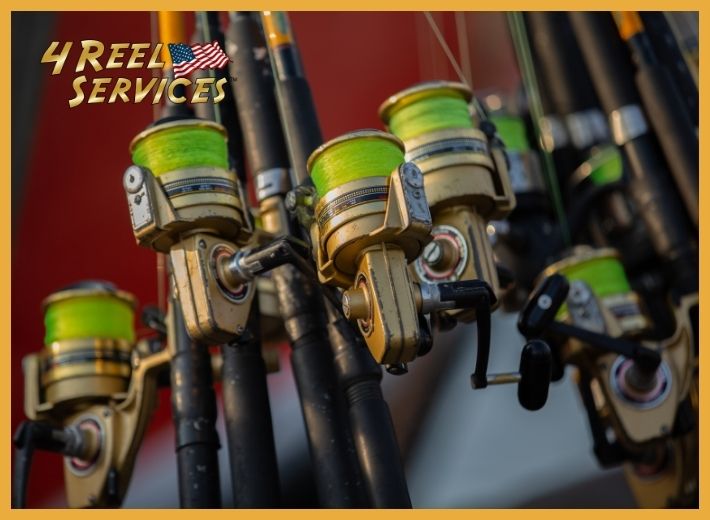
If you're running a charter, a guide operation, or a boat with serious tackle, a fleet account is worth a conversation. Reach out at 4ReelServices.com or call 561-509-9055. Twenty years of authorized service on all major brands and 150,000 parts in stock — we've earned the captains who trust us with their gear.